Glass orb image of man exploring woods in curious stance - metaphor for using questions to understand situations

#029 – Scouting the Terrain (Using Questions)

Develop your facilitative leadership skills – Provide empowering leadership through your choice of questions

Please help us to get the word out in just two clicks – click here – then click the like button

The benefits of better questions

Why take this challenge?

Develop more facilitative approaches to leadership through questions

Build greater participation, contributions and ownership from your team

Use normal working opportunities to better grow your people’s potential


Graphic image reflecting different pathways to take the adventure

Good questions are the most powerful tools available to us. They stimulate engagement, confront error, energise debate, foster humility, unearth reason, generate insight, build ownership, deliver progress and help us find the right answers. Questions are key to adopting a more facilitative (and less directive) style of leadership. They help us to ensure progress, and to develop our people at the same time. And they enable us to ‘Scout the Terrain’ – to really understand what is going on before seeking to influence an outcome.

But how do we find good questions?

I have been a consultant and a facilitator for over 30 years now, and I confess they still don’t come as easily as I want them to.

I believe that part of the issue is attitudinal – in my heart (read ego) I still like to be the one with the answer. But I also like to help people grow. And I know that an answer provided by me is nowhere near as powerful as an answer discovered by ‘them’.

Something that has been immensely helpful to me is Monitoring my Internal Condition. If I can keep my head in curiosity, questions come much more easily. And if I can focus on my role as a facilitator over my role as a consultant, I can rid myself of the expectation that I should already have the answers.

Also, if I can think through the journey (at a meta-level) that people are likely to be taking beforehand, I have more time to develop the questions and incorporate them in the process I am using.

And there are also sources of good questions available if we have the time to peruse them in advance. Liberating Structures is one such source, and contains a range of question / format combinations that can be used effectively to engage people’s thinking.

So this week’s adventure is to practice deliberately using questions where you might otherwise provide answers.


Graphic image reflecting the idea of a Pack of resources to support the adventurer in the challenge

You may find the following resources helpful in tackling your challenge or in gaining further benefits from the skills and insights you develop

To catch up on past adventures you may have missed, feel free to browse our Adventures Library


Graphic image suggesting the idea of posting a record of the adventurer's journey

Let us know how you get on.
Share your experience, your insights and your observation using the comments section at the bottom of the Linkedin post.

Please help us to extend and develop our community by sharing what you are doing. Click on the links below where you are most active, and then like or share the article to your network. Thank you for helping.

And share your progress and insights with the Twitter LbA community using #leadingbyadventure

Useful links:


Glass orb with image of roulette wheel to reflect the combination of excitement and randomness in this form of desk stretches exercises

#028 – Wheel Decide Desk Stretches

Use frequent physical stretching exercises to help keep you brain active – Try out the Wheeldecide/Bupa stretch combination for an easy solution

Please help us to get the word out in just two clicks – click here – then click the like button

The benefits of regular desk stretches

Why take this challenge?

Keep healthy when working at the screen for long periods of time

Pull out the kinks that can damage your posture and health

Use brief easy exercises to add regular sparks back into your work


Graphic image reflecting different pathways to take the adventure

It was always too easy to sit for too long in one place. But at least the normal working environment got us up and moving around as we went to meetings, or popped across the room for a quick word.

Now, with more of us working, meeting and chatting from home, we often find ourselves in the same position until our physiological requirements cause us to do otherwise.

To combat this, and to help people maintain their health, BUPA created a simple set of eight desk stretches that take just seconds to do. They are so quick, they do not really distract from your work. More, they help you retain a perspective over it – and yourself.

Also, WheelDecide created a great web-page based tool that provides a random selection from a range of provided options, at a click of a mouse.

Combine these things together and you get: https://meeting.toolchest.org/wfhx/ – A page which, at the click of a mouse, randomly selects a stretch exercise for those working sat at a desk.

I have been using these 15-30 second desk strecthes as part of my longer meetings for some time now. And I have to say that you see people’s spirits visibly rise, people join straight in, move, smile, laugh, and restart the meeting with a real uplift.


Graphic image reflecting the idea of a Pack of resources to support the adventurer in the challenge

You may find the following resources helpful in tackling your challenge or in gaining further benefits from the skills and insights you develop

To catch up on past adventures you may have missed, feel free to browse our Adventures Library


Graphic image suggesting the idea of posting a record of the adventurer's journey

Let us know how you get on.
Share your experience, your insights and your observation using the comments section at the bottom of the Linkedin post.

Please help us to extend and develop our community by sharing what you are doing. Click on the links below where you are most active, and then like or share the article to your network. Thank you for helping.

And share your progress and insights with the Twitter LbA community using #leadingbyadventure

Useful links:


Orb based image showing person looking back from climb - metaphor for after adventure review

#027 – Review

Ensure you maximise your team’s learning from each adventure – Use simple review tools to capture and reinforce new insights

Please help us to get the word out in just two clicks – click here – then click the like button

The benefits of effective after-action review

Why take this challenge?

Maximise the potential of every experience for your future potential

Work with your team to increase its learning and growth

Establish a culture of continuous improvement through review


Graphic image reflecting different pathways to take the adventure

Einstein said “Once you stop learning, you start dying”.

Learning is our way of fully engaging with our life, its experiences, and its opportunities. It is how we embrace our situation and those around us. And also how we effect change in both.

If we simply let our lives pass by us, immune to its possibilities. Then, for that moment at least, we die. Conversely, we live to the extent that we embrace life and its potential. A wonderful vibrant symbiosis in which we shape each other’s destinies. And we shape life itself.

The 26 adventures to date have hopefully been part of that learning and living for you. Opportunities to engage different perspectives, and see the effect they have on you. But more than that, to see the effect that deliberately and routinely adopting new perspectives has on you.

But I wonder if you have been getting as much out of them as you could? Or indeed out of all of the other things that you are routinely engaging with?

Have you been reflecting on the learning that is actually available to you? Asking yourself questions that help to make full use of the insights available, and to reinforce them in a way that they are more accessible going forward.

That is what this week’s adventure is all about. The questions and the reflection that helps us better utilise the learning available.


Graphic image reflecting the idea of a Pack of resources to support the adventurer in the challenge

You may find the following resources helpful in tackling your challenge or in gaining further benefits from the skills and insights you develop

To catch up on past adventures you may have missed, feel free to browse our Adventures Library


Graphic image suggesting the idea of posting a record of the adventurer's journey

Let us know how you get on.
Share your experience, your insights and your observation using the comments section at the bottom of the Linkedin post.

Please help us to extend and develop our community by sharing what you are doing. Click on the links below where you are most active, and then like or share the article to your network. Thank you for helping.

And share your progress and insights with the Twitter LbA community using #leadingbyadventure

Useful links:


Coloured roller process - metaphor for Kanban

#026 – The Spirit of Shared Adventure?


Adventuring together through teamwork, support and a sense of progress – Using Kanban and daily standups to support each other’s individual adventuresColoured rollers metaphor for Kanban

Please help us to get the word out in just two clicks – click here – then click the like button

The benefits of Kanban thinking

Why take this challenge?

Explore Kanban and standup as a regular basis for support and encouragement

Increase the rate of progress on projects and processes

Build a greater sense of teamwork and shared ownership of progress


Graphic image reflecting different pathways to take the adventure

There are a number of qualities we associate with the term adventure: Challenge; Novelty; Achievement; Movement. Sometimes we can engage with and complete adventures on our own, and sometimes we need help. And it is always good to be able to share experiences and insight.

All of these things are as true of the work environment as they are of the great outdoors. From an adventure mindset, it is great to be given tasks that stretch us. Situations that cause us to think in novel ways. The opportunity to do more than we were previously capable of. To experience personal growth and progress toward our potential.

And as we engage with these adventures, it is great to feel we are not alone. That we have others to help us think things through. To help us shift the rocks in our way. To empathise with our setbacks and to celebrate our successes.

As part of Agile frameworks, people are rediscovering this opportunity for this experience through what is known as the daily stand-up, and through a very simple tool called Kanban. And this is the tool that is the subject of this week’s adventure.

Kanban

At its simplest, Kanban is a simple three box model: To Do; Doing; Done. Within a team it makes individual victories part of a shared landscape of team success. And, in this way, it builds cohesion and a sense of collective responsibility.

New priority actions are thought out and added to the To Do box. People select items which utilise their strengths, but ideally also develop them, and move them to the Doing box. And as they complete them, they go to the Done box. Progress is reviewed daily by the whole team in a brief daily stand-up meeting, where progress is quickly shared (and celebrated), problems aired and help allocated, and new tasks identified.

Kanban charts are best set up in a prominent visible central location, but sadly this is not currently an option for many of us. However, they can also be set up virtually, and there are great tools available to do this.


Graphic image reflecting the idea of a Pack of resources to support the adventurer in the challenge

You may find the following resources helpful in tackling your challenge or in gaining further benefits from the skills and insights you develop

To catch up on past adventures you may have missed, feel free to browse our Adventures Library


Graphic image suggesting the idea of posting a record of the adventurer's journey

Let us know how you get on.
Share your experience, your insights and your observation using the comments section at the bottom of the Linkedin post.

Please help us to extend and develop our community by sharing what you are doing. Click on the links below where you are most active, and then like or share the article to your network. Thank you for helping.

And share your progress and insights with the Twitter LbA community using #leadingbyadventure

Useful links:


Image of someone seeing themselves in a shard of mirror - metaphor for self-reflection and ORID

#025 – Are you Seeing Yourself?

Take an adventure into your own thinking processes – Use ORID to improve how you engage with conflict

Please help us to get the word out in just two clicks – click here – then click the like button

The benefits of using ORID to reflect on your internal processes

Why take this challenge?

Become more effective at remaining as the person you want to be

Learn from the situations that lead to frustration and agitation in you

Help your team handle conflict productively and with insight


Graphic image reflecting different pathways to take the adventure

Our greatest adventure is always the one that we take into ourselves. Externally, we may encounter formative challenges, inspiring insights, life-changing experiences. But it is the formative, inspiring, life-changing components of those things that really matter. And those victories are the ones we contend within ourselves.

As with all such things, the victories come easier with experience. They come easier as we can better understand and process what is happening to us. As we develop and adopt methods that help us make sense of what is going on.

ORID is one such model. And it is the subject of this week’s adventure.

ORID is an acronym for the four key steps of making sense of the external and internal components of our adventures, and how they connect.

The ORID Model

  1. Objective consideration of the situation as we experience it – what we read, see, hear, feel, smell, taste.
  2. Reflecting on how we experience that within us – how we feel, our emotional and physiological reactions
  3. Interpreting what is happening through our mental models – the connections and meanings we assign
  4. Deciding on our response – how we choose to act (or not), what we communicate, how we adjust internally

(5) Which may, or may not, impact on the Objective reality we experience

Martin Gilbraith postulates (with reasonable cause) that this is the universal principle of facilitation.  It is certainly what good facilitators do, although they may describe it differently, or interpret it through alternative models.

The power of helping individuals or groups explore what is happening in each of these four areas can do much to defuse conflict and build understanding and consensus. Such questions can also help us look ‘under the hood’ at our own internal (combustion?) engine, and to make conscious choices that move us beyond the disabling paradigm that anybody can ‘make us’ feel anything.

As we move forward on our Adventures, ORID will prove a helpful tool to keep in our pack, so this week our Adventure is to equip ourselves to use it.


Graphic image reflecting the idea of a Pack of resources to support the adventurer in the challenge

You may find the following resources helpful in tackling your challenge or in gaining further benefits from the skills and insights you develop

To catch up on past adventures you may have missed, feel free to browse our Adventures Library


Graphic image suggesting the idea of posting a record of the adventurer's journey

Let us know how you get on.
Share your experience, your insights and your observation using the comments section at the bottom of the Linkedin post.

Please help us to extend and develop our community by sharing what you are doing. Click on the links below where you are most active, and then like or share the article to your network. Thank you for helping.

And share your progress and insights with the Twitter LbA community using #leadingbyadventure

Useful links:


Surrealistic scene of ripples on water - minding the ripples - metaphor for using the Solution Effect Diagram to map put implications

#024 – Minding the Ripples

Anticipate the full implications of your decisions ahead of time – Use the solution-effect diagram to accentuate the positive

Please help us to get the word out in just two clicks – click here – then click the like button

The benefits of solution effect diagrams

Why take this challenge?

Prototype the impact of your decisions on your team and organisation

Preserve the cultural and behavioural values that are important to you

Better understand causality and how to achieve the effects you really want


Graphic image reflecting different pathways to take the adventure

Whether a decision is good or bad is largely determined by its implications and consequences. It is sadly an all to common experience for a change intended to improve something in one area to create issues elsewhere. When it does, the common refrain is ‘didn’t they realise …?’. And the answer is usually ‘Frankly, no’

The ripples emanating out from any decision can spread far and wide. And it can be difficult to see them all beforehand, unless you are systematic about it. The Solution Effect diagram (also known as the reverse fishbone) is just such a systematic tool.

Used effectively, it enables you to see everything that might be impacted. Both the good (usually intentional) and the bad (usually accidental). This means that you can better see how to mitigate the negative impacts. And to prepare people to take full advantage of the positive ones.

Furthermore, the tool can be used to prototype a decision. This is sometimes the fastest (most agile) means of designing a good decision. Start with a bad decision – one that is raw and not been thought out – but is in the intended direction. Then apply the solution effect tool to understand what would be likely to result in practice. And use this information to rework the prototype bad decision into something good.


Graphic image reflecting the idea of a Pack of resources to support the adventurer in the challenge

You may find the following resources helpful in tackling your challenge or in gaining further benefits from the skills and insights you develop

To catch up on past adventures you may have missed, feel free to browse our Adventures Library


Graphic image suggesting the idea of posting a record of the adventurer's journey

Let us know how you get on.
Share your experience, your insights and your observation using the comments section at the bottom of the Linkedin post.

Please help us to extend and develop our community by sharing what you are doing. Click on the links below where you are most active, and then like or share the article to your network. Thank you for helping.

And share your progress and insights with the Twitter LbA community using #leadingbyadventure

Useful links:

About Culturistics: Empowering full strategy engagement through: adventurous visions; deployment frameworks; culture management; facilitative leadership; inspirational meetings; insight landscaping; & powerful partnerships
Ladder in water - metaphor for spotting adventures

#023 – Spotting Adventures

Open your mind to the wider potential of your environment – Use de Bono’s PMI tool to better identify new  possibilities

Please help us to get the word out in just two clicks – click here – then click the like button

The benefits of PMI

Why take this challenge?

Look beyond your initial reactions to more creative understanding

Hone your ability to better see both sides and new possibilities in things

Find unexpected treasure that you might otherwise walk straight past


Graphic image reflecting different pathways to take the adventure

I grew up at a time when thinking was a lot more linear than it is now. Creativity was something you either had or you didn’t. So the ideas of Edward de Bono were a revelation to me. His insight into the natural tendencies of the mind, and his techniques for managing them were a joy.

There is a lot more individual creativity about now, but sadly only a very small proportion of it finds its way into business thinking – particularly via teamwork. We know about creativity, but we are often too busy to think about using it as a natural part of our work.

So de Bono’s tools are as important now as they were forty years ago. At least in terms of putting something in place to help us to make creativity more common-place.

One very quick and easy tool to use is PMI. PMI stands for Plus, Minus, Interesting. It reflects the whole tool in three words. The tool is simply a matter of taking a few moments to consider new ideas or options in a balanced way.

This may sound trivial, but if you think back a bit – how often do we do it? How many of the new things that came to us have we deliberately evaluated beyond our initial response? In how many meetings have all those assembled deliberately analysed both sides together, rather than simply taken sides?

By taking a more systematic approach to considering the things we encounter, we can spot new perspectives, new possibilities, new adventures, that we might otherwise miss.

So this week’s adventure is to practice and apply PMI, and to see what it does for you.


Graphic image reflecting the idea of a Pack of resources to support the adventurer in the challenge

You may find the following resources helpful in tackling your challenge or in gaining further benefits from the skills and insights you develop

To catch up on past adventures you may have missed, feel free to browse our Adventures Library


Graphic image suggesting the idea of posting a record of the adventurer's journey

Let us know how you get on.
Share your experience, your insights and your observation using the comments section at the bottom of the Linkedin post.

Please help us to extend and develop our community by sharing what you are doing. Click on the links below where you are most active, and then like or share the article to your network. Thank you for helping.

And share your progress and insights with the Twitter LbA community using #leadingbyadventure

Useful links:


Image related to bringing the best version of yourself

#022 – Bringing the Best Version of Yourself

Creating a climate in which authenticity and creativity thrive – Being the person who makes the difference to your meetings

Please help us to get the word out in just two clicks – click here – then click the like button

Benefits of monitoring your internal condition

Why take this challenge?

Create meeting climates which bring out the very best in people

Shift your team culture to one in which people can fully be themselves

Be more in control of how your emotions help create the relationships you need


Graphic image reflecting different pathways to take the adventure

Brene Brown’s inspirational TED talk on connecting with others, describes the importance of courage – the openness to share all of yourself, flaws and all, whole heartedly.

So, I would like you to imagine your next team meeting, and to imagine you are going to be totally open. How do you feel? Can you feel a slight tightness around your heart?

Do you fear that some people would use it against you. Perhaps you feel they might judge you?
And does that feeling, that thought, make you defensive? It would me.

Vulnerability IS key to effective teamwork, but only in the right climate. It is virtual suicide in the wrong one.

Given the importance of such vulnerability to team performance and potential, it becomes clear that the climate is something we need to better understand and manage. And to take responsibility for our own part in that. 
And that is the subject of this week’s adventure.

It is based on the work of Otto Scharmer. And it is about our willingness to be honest (at least with ourselves) about what is currently happening inside us in response to what is being said (spoken and unspoken) outside us.

When we look into ourselves, do we sense open and inclusive feelings and attitudes of curiosity, compassion and courage? Or are we finding ourselves tending to judgement, cynicism and a degree of fear over what might develop if ‘it is not addressed’.

The former ‘open’ feelings and attitudes are great for creativity, honesty, bonding and insight, but they are fragile.

Conversely, the latter ‘closed’ feelings risk blame, politics, resentment, and disengagement, and they are contagious. ‘Openness’ all too easily turns to ‘closed’ attitudes in response to sensing ‘closed’ responses in others. And this is deep within our human DNA.


Graphic image reflecting the idea of a Pack of resources to support the adventurer in the challenge

You may find the following resources helpful in tackling your challenge or in gaining further benefits from the skills and insights you develop

To catch up on past adventures you may have missed, feel free to browse our Adventures Library


Graphic image suggesting the idea of posting a record of the adventurer's journey

Let us know how you get on.
Share your experience, your insights and your observation using the comments section at the bottom of the Linkedin post.

Please help us to extend and develop our community by sharing what you are doing. Click on the links below where you are most active, and then like or share the article to your network. Thank you for helping.

And share your progress and insights with the Twitter LbA community using #leadingbyadventure

Useful links:


Picture of tree in mist with sun behind it reflecting a sense of mystery startpoints

#021 – Mystery Startpoints

Massively increase your creative options for finding novel ways forward – Use Brutethink to give your brain a real workout in making new connections

Please help us to get the word out in just two clicks – click here – then click the like button

Benefits of using mystery startpoints like Brutethink to stretch your imagination

Why take this challenge?

Move outside the invisible confines of our current thinking patterns

Develop techniques and skills to introduce radical new ideas to your work

Build a culture of more innovative working patterns and processes


Graphic image reflecting different pathways to take the adventure

Our brains are immensely powerful organs. But they are also correspondingly lazy. They like spending time in what they know and where they feel confident and comfortable. As a result they tend to get themselves into ruts, and to justify that by being very competent and confident in that rut.

Creativity, by its very nature, is about stepping out of the rut.

I caught a clip for a reality TV programme recently, with one of the judges expounding that ‘You can’t teach creativity’. The phrase and the tone annoyed me – it conveyed a sort of ‘you’ve either got it, like me, or you never will!’ arrogance. But, in a way, what she said is technically correct. You can’t teach it! And ‘you can’t teach it’ because we all have it. Even if statements like the example above make us believe we don’t. What we need to teach is the confidence to access it.

Developing that confidence can benefit immensely from creative tools. Our brains may be reluctant to find ways to climb out of their comfortable ruts. But if, by means of a simple tool, you place them a distance away from that rut, you will be surprised at the speed and pace they can make connections to get back into it. The thing is, that any way in is also a way out. And once seen, it cannot be unseen.

This is the premise behind the Brutethink technique which Michael Michalko describes on page 157 of his delightful Thinkertoys book. Take a word at random, and make connections between it and the means to resolve your current issue.


Graphic image reflecting the idea of a Pack of resources to support the adventurer in the challenge

You may find the following resources helpful in tackling your challenge or in gaining further benefits from the skills and insights you develop

To catch up on past adventures you may have missed, feel free to browse our Adventures Library


Graphic image suggesting the idea of posting a record of the adventurer's journey

Let us know how you get on.
Share your experience, your insights and your observation using the comments section at the bottom of the Linkedin post.

Please help us to extend and develop our community by sharing what you are doing. Click on the links below where you are most active, and then like or share the article to your network. Thank you for helping.

And share your progress and insights with the Twitter LbA community using #leadingbyadventure

Useful links:


People pondering around a campfire on a beach - metaphor for hopes and concerns exercise

#020 – Campfire Truths

Discover where people are coming from and their expectations – Build greater awareness and ownership for the outcomes

Benefits of Hopes and Concerns exercise

Why take this challenge?

Clear the air and understand where people might be coming from.

Understand any initial differences in expectations.

Build greater awareness and ownership for the outcomes.

Simply build a shared understanding, a shared hope.


Graphic image reflecting different pathways to take the adventure

This weeks challenge for you and your team is called Hopes and Concerns.

At one level Hopes and Concerns is extremely simple. It is a flipchart divided down the middle, and people place their hopes on one side and their concerns on the other.

Hopes and concerns for what? Well it could be for anything: A meeting; the week ahead; a new project; the business; a change initiative – whatever.

However, its simplicity belies its power. Hopes and concerns is a great tool for: Aligning people behind objectives; surfacing hidden agendas; developing balanced perspectives; understanding each other; building ownership and getting things started.

If you are using a virtual whiteboard in your meeting, people can stick up their thoughts on sticky-notes, and then they can be grouped and discussed. Alternatively, you can use a virtual flipchart to capture contributions offered by the group verbally.

A couple of important tips that help ensure the quality of this exercise:

  1. To get balanced contributions, get people to write down two of each silently, and confirm they have all done so before inviting them to stick them up or shout them out
  2. Say to the group: “We’ll keep these visible so that we can all work toward fulfilling the hopes and avoiding the concerns”. In this way you share responsibility for them and make the desired outcomes more likely

Also, it there are any items on either list that you will not be able to do anything about. Simply make that clear from the outset, and say that we can pick it up again after the meeting.


Graphic image reflecting the idea of a Pack of resources to support the adventurer in the challenge

You may find the following resources helpful in tackling your challenge or in gaining further benefits from the skills and insights you develop

To catch up on past adventures you may have missed, feel free to browse our Adventures Library


Graphic image suggesting the idea of posting a record of the adventurer's journey

Let us know how you get on.
Share your experience, your insights and your observation using the comments section at the bottom of the Linkedin post.

Please help us to extend and develop our community by sharing what you are doing. Click on the links below where you are most active, and then like or share the article to your network. Thank you for helping.

And share your progress and insights with the Twitter LbA community using #leadingbyadventure

Useful links:


Picture of someone timidly stepping onto rickety bridge - metaphor for tapping intuition

#019 – Clues in Timidity – Tapping Intuition

Tap into your intuition and use it to ensure a more secure footing – Use your subconscious to check whether your conscious has the whole picture

Please help us to get the word out in just two clicks – click here – then click the like button

Benefits of tapping into your intuition

Why take this challenge?

Access deeper levels of wisdom within yourself

Increase your success rate by recognising and avoiding issues in advance

Develop the skills of your team in predicting the future


Graphic image reflecting different pathways to take the adventure

It is a little known fact, but it turns out that most project failures could have been foreseen before they launched. The article ‘Using intuition to predict the future’ tells of a study of failed projects across a wide range of businesses.

The study was undertaken by a large consultancy firm. The interviewers asked those who had been involved a very insightful question. They asked whether, at the point of launch, people would have bet $500 of their own money on the project’s success. And overwhelmingly the answer was ‘no’.

It turns out that, after we have applied all of our logic in planning success, there is still an emotional component within us which has more to tell us. A subconscious sense which assesses things that are too complex and involved and uncertain for factual assessment. One that doesn’t return its answers in words and numbers. But in a sense of discomfort, or disquiet, that is highlighted when we are asked to ‘bet our own money’.

This week’s adventure is all about tapping into that intuition.


Graphic image reflecting the idea of a Pack of resources to support the adventurer in the challenge

You may find the following resources helpful in tackling your challenge or in gaining further benefits from the skills and insights you develop

To catch up on past adventures you may have missed, feel free to browse our Adventures Library


Graphic image suggesting the idea of posting a record of the adventurer's journey

Let us know how you get on.
Share your experience, your insights and your observation using the comments section at the bottom of the Linkedin post.

Please help us to extend and develop our community by sharing what you are doing. Click on the links below where you are most active, and then like or share the article to your network. Thank you for helping.

And share your progress and insights with the Twitter LbA community using #leadingbyadventure

Useful links:


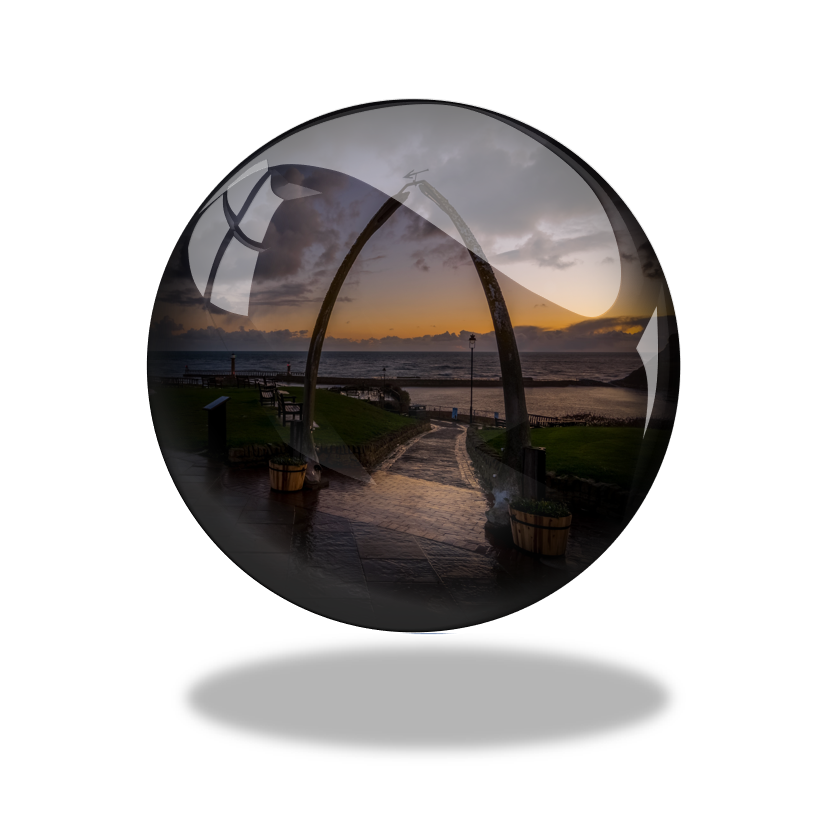
Picture of Whale Bones at Whitby - as symbol for fishbone diagram cause and effect

#018 – Diagnostic Bones – Fishbone Diagrams

Look deeper than what at first appears; help your team solve issues at their rootPicture of Whale Bones at Whitby - as symbol for fishbone diagram cause and effect - Source: Tim Hill via Pixabay

Please help us to get the word out in just two clicks – click here – then click the like button

The benefits of using Fishbone diagrams (Ishikawa diagrams) to gain insight into causality

Why take this challenge?

Solve problems once and for all

Resolve long term and recurring issues

Build your team’s understanding of causality


Graphic image reflecting different pathways to take the adventure

Developed in 1982 by Kaoru Ishikawa, the Fishbone Diagram (so-called because of its shape) is one of the most useful mechanisms for a team of people to systematically solve the problems they are facing. It helps people move beyond pet theories, simplistic explanations and blame. It uses structured creativity to broaden their view and develop a richer picture of causality – one that is more likely to contain the real issue(s) and new insights.

Like all management methods from Japan at that time, it is both simple and collaborative: Bringing people together to share deeper insight and understanding. And yet, in that simplicity lies a surprising power to reach past division, to educate, and to bond people in finding a way forward.

And despite its power and its popularity, it is now increasingly common to find people who have never used them, at least not within the last decade.
So the adventure this week, for you and your team, is to get out those bones, and remind yourself of how useful they can be.


Graphic image reflecting the idea of a Pack of resources to support the adventurer in the challenge

You may find the following resources helpful in tackling your challenge or in gaining further benefits from the skills and insights you develop

To catch up on past adventures you may have missed, feel free to browse our Adventures Library


Graphic image suggesting the idea of posting a record of the adventurer's journey

Let us know how you get on.
Share your experience, your insights and your observation using the comments section at the bottom of the Linkedin post.

Please help us to extend and develop our community by sharing what you are doing. Click on the links below where you are most active, and then like or share the article to your network. Thank you for helping.

And share your progress and insights with the Twitter LbA community using #leadingbyadventure

Useful links:


Man walking along steps through storm - metaphor for motivation and force field analysis

#017 – Mapping Motivations

Understand the forces that shape the behaviours around you – Learn to better modify behaviours through forcefield analysisMapping Motivation - header for exploring force field analysis

Benefits of mapping motivation and force field analysis

Why take this challenge?

Gain greater insight into why people act the way they do

Help people better adopt the behaviours they need to succeed

Make change easier and more lasting


Graphic image reflecting different pathways to take the adventure

Have you struggled to implement new ways of doing things? Launched a new approach and found the takeup somewhat variable? Seen change initiatives falter and never really get going?

The problem is often that what may seem obvious to us is not so obvious to others – even after it has been explained. And the struggle and tensions that are obvious to them, and not always properly understood by us. But if we don’t understand those tensions, we struggle to help people rebalance them. And that imbalance will resist change.

And what is true for others, is also true for us. Are you struggling to maintain a change in yourself? Have you fully appreciated all of the forces that create that struggle?

An extremely useful, and deceptively simple, tool to map these out was devised by Kurt Lewin. Called Force Field Analysis is simply plots out all of the motivations that promote and enable a behaviour on one side. And all of the demotivations that make it difficult or unpleasant on the other.

Lewin’s contention was that our behaviour operates at a point of equilibrium in these forces. And that a change in behaviour requires a shift in the point of equilibrium. In other words, we don’t need to make it all positive, we just need to tip the balance.


Graphic image reflecting the idea of a Pack of resources to support the adventurer in the challenge

You may find the following resources helpful in tackling your challenge or in gaining further benefits from the skills and insights you develop

To catch up on past adventures you may have missed, feel free to browse our Adventures Library


Graphic image suggesting the idea of posting a record of the adventurer's journey

Please help us to extend and develop our community by sharing what you are doing. Click on the links below where you are most active, and then like or share the article to your network. Thank you for helping.

And share your progress and insights with the Twitter LbA community using #leadingbyadventure

Useful links:


Picture metaphor for taking a strategic context (via SWOT)

#016 – Developing a strategic context

Use strategic perspective to tune into new opportunities in your fast-evolving reality – Fast, frequent SWOT analysis can help your team develop timely insights

Please help us to get the word out in just two clicks – click here – then click the like button

Benefits of taking a strategic context perspective

Why take this challenge?

Inspire and strengthen skills that help people rise above change

Develop agile strategic perspectives in your team

Keep on top of timely opportunities in a fun energetic way


Graphic image reflecting different pathways to take the adventure

There is a tendency (fuelled in part by the literature) to think of SWOT analysis as the conserve of Business Strategy.

And yet the technique and its ability to balance perspectives both optimistic and pessimistic, current and future, has a lot to offer almost any situation that might benefit from a creative solution (and what situation doesn’t these days).

The tool is great for understanding the strategic context of virtually anything – you, your team, your idea, your day, an event, a meeting, a course of action, locations, products, services, relationships, …

And in this fast evolving world in which we find ourselves, it is a technique that benefits from regular application. It can help us adapt and flex to changing context, shifting scope, and new boundaries.

Which is pretty good for a technique that takes less than 10 minutes, flags up new possibilities, and can save you hours of redundant effort.

So our adventure this week is about seeing this perspective on an aspect of your own situation, and seeing what it reveals to you anew.


Graphic image reflecting the idea of a Pack of resources to support the adventurer in the challenge

You may find the following resources helpful in tackling your challenge or in gaining further benefits from the skills and insights you develop

To catch up on past adventures you may have missed, feel free to browse our Adventures Library


Graphic image suggesting the idea of posting a record of the adventurer's journey

Let us know how you get on.
Share your experience, your insights and your observation using the comments section at the bottom of the Linkedin post.

Please help us to extend and develop our community by sharing what you are doing. Click on the links below where you are most active, and then like or share the article to your network. Thank you for helping.

And share your progress and insights with the Twitter LbA community using #leadingbyadventure

Useful links:


Glass orb of Girl offering paintbrush and palette - metaphor for facilitating adventure in others

#015 – Facilitating Adventure in Others

Building confidence in our ‘voice’ and the ‘voices’ around us – Using structure to draw out insight and self-discovery in peopleGirl offering paintbrush and palette - metaphor for facilitating adventure in others

Please help us to get the word out in just two clicks – click here – then click the like button

Benefits of facilitating adventure in others

Why take this challenge?

  • To think through what it might mean to find our ‘voice’ and inspire others to find theirs
  • To develop a picture of the changes we want to see for ourselves and those around us
  • To provide a context for using structure to inspire creativity and self-discovery


Graphic image reflecting different pathways to take the adventure

In Leading by Adventure, our first 12 or so adventures might be best described as adventuring in leadership. They have been largely about us, and who, how and why we are.

They have hopefully been an exercise in moving our perspective out, and seeing things a little bit differently.  Partly in the hope that some of those perspectives we might find helpful, and want to use again. But mostly with the intention of developing a habit of deliberately taking time to test out new perspectives and whatever they may or may not bring.

But what about the adventure we lead in others? How do we facilitate attitudes and habits in others to adventurously adopt new perspectives? After all, the stated aim of our adventuring is to help equip people for a future that is increasingly all about change.

So, as leaders (and we are ALL leaders – ‘Leadership is a choice, not a position’ – Stephen Covey) how are we helping those around us to explore new perspectives? How are we helping them to develop the skill of shifting their view points? And how are we developing confidence in them? That they too are adventurers in change and not the victims of it?

Over the next 12 or so adventures, our focus will be on leading (facilitating) adventures in others. Whatever our relation to them might be. In doing so, our own adventure will be into Covey’s vision for us: To find our ‘voice’ and inspire others to find theirs. (See the pack)

We will be using tools and techniques (some of which may be familiar) that ‘draw out’ from people, rather than ‘push in’. Tools that offer people a path to self-discovery of insights, rather than passively receiving  them from others. And to keep it real, and make it sustainable, these are all things that you will be applying within your ‘normal’ work. Your (and their) current needs and situations.

The purpose of this week’s adventure then, is to develop a perspective, a vision, for how you would ideally see their voices develop. You may already have solutions for each of the tracks in place. But if you do, then please take this opportunity to consider how they might be further improved.


Graphic image reflecting the idea of a Pack of resources to support the adventurer in the challenge

You may find the following resources helpful in tackling your challenge or in gaining further benefits from the skills and insights you develop

To catch up on past adventures you may have missed, feel free to browse our Adventures Library


Graphic image suggesting the idea of posting a record of the adventurer's journey

Let us know how you get on.
Share your experience, your insights and your observation using the comments section at the bottom of the Linkedin post.

Please help us to extend and develop our community by sharing what you are doing. Click on the links below where you are most active, and then like or share the article to your network. Thank you for helping.

And share your progress and insights with the Twitter LbA community using #leadingbyadventure

Useful links:


Discovering diversity - picture of a woman seeing herself in a range of images of people from different cultures

#014 – Discovering Diversity

Investigate & celebrate the diversity that is around you – Invite your people to introduce more of themselves: their richness, their uniqueness, & their journey.Discovering Diversity - exploring difference

Please help us to get the word out in just two clicks – click here – then click the like button

Benefits of better embracing diversity - discovering diversity

Why take this challenge?

Embrace and celebrate diversity in all its forms – make it a natural part of your team’s processes

Build relationships and insight that embraces people through cultural boundaries and backgrounds

Stimulate the creativity that can be found in simply bring more of ourselves to the workplace


Graphic image reflecting different pathways to take the adventure

We all grow up with stories, with traditions and experiences. Some are common, but many are unique. They become OUR stories. And together they create  a bigger story: Our own individual narrative of who we are and why.

Our stories may be actual stories, words and pictures conjured out of a book, perhaps read to us by someone we loved. Or they may be memories, wise counsel, fragments of conversation that reflect what is important to those around us. They may be rituals, pet phrases, recipes, gestures, things that you remember as ‘belonging’ to your family or community. We all have them. And they are important.

And they are all different. The stories of others may have familiar elements to them, particularly where our ‘origins’ are similar. But they will always have something different also.

And where our ‘origins’ are dissimilar, we may find more new elements. But we will find familiar elements also. We will find connection and resonance in their meanings that may well surprise us.

Sharing elements of our story is a good way to build those connections and resonance, but it does more than that.

It helps us to become more aware of our common humanity. It highlights for us elements of our own story that we may have forgotten or lost sight of. It offers insight which helps build empathy, trust and teamwork. It stimulates creativity.

And it helps build understanding that the similarities and differences we have transcend issues of ethnicity, colour, orientation, and religion. That there are more reasons to hold together than to separate. And that there is an wonderful richness in everyone if only we open our eyes, ears and minds to appreciate it.


Graphic image suggesting the idea of posting a record of the adventurer's journey

Let us know how you get on.
Share your experience, your insights and your observation using the comments section at the bottom of the Linkedin post.

Please help us to extend and develop our community by sharing what you are doing. Click on the links below where you are most active, and then like or share the article to your network. Thank you for helping.

And share your progress and insights with the Twitter LbA community using #leadingbyadventure

Useful links:


Writing paper plane in a open sky as a metaphor for where words can transport you - verbal voyages

#013 – Verbal Voyages

Only say ‘Yes, and …’ and see what new perspectives await you – Give your curiosity a serious workout today!Header gif of a writing paper plane in a open sky as a metaphor for where words can transport you - verbal voyages

Please help us to get the word out in just two clicks – click here – then click the like button

Benefits of taking verbal voyages

Why take this challenge?

To practice plussing and develop the skills, language and reflexes of building on ideas

To explore the impact on people, situations and your own learning of sustaining the positive

To practice skills that challenge your team and help it grow in creativity and insight


Graphic image reflecting different pathways to take the adventure

I am grateful to Andy Denne for this week’s exercise. And I have to admit, it is going to be every bit as big a challenge on me as it will be on you.

You may have seen the film ‘Yes Day’ promoted recently, where two parents decide that for 24 yours they will only say ‘Yes’ and not ‘No’. Well this is not that, well not quite.

This is ‘yes’ day with responsibilities built in. It is ‘yes, and …’ day.  As in “Yes, and … to make that work effectively we need to find a way to … overcome this obstacle … or deal with these risks/consequences”. Not “No, because …”, nor even “Yes, but …” – For an entire 24 hours, only “Yes, and …”

“Yes and …” comes from the world improvisational comedy, but has great application to the world of business also. The challenge will be how quickly and creatively you can think about what else needs to happen to make what is suggested not only possible, but a good idea.

It is not about putting your reservations to one side, it is about embracing them and  turning them on their head to invite further creativity in how to deal with them. It is a really great skill set to have. It leads to new possibilities, innovation and adventure. It raises energy, grows ownership, and encourages vision and teamwork. It is about seeing and staying with possibilities long enough to fully explore their potential.

The interesting thing about human beings is that we mentally emphasise the downsides of new ideas. We see the risks many times faster and more clearly than we see the possibilities. And because of this we tend to write things off before we’ve had any real opportunity to fully explore their potential. We stifle innovation.

But innovation rarely comes as just one new idea. It usually needs a lot more smaller new ideas around it to make it work. And those supporting ideas take openness and a bit of time.

“Yes, and …” buys that time

So the challenge this week is to determine, to commit (because it does need resolve) to give “Yes, and …” a try. And to see where that takes you.


Graphic image reflecting the idea of a Pack of resources to support the adventurer in the challenge

You may find the following resources helpful in tackling your challenge or in gaining further benefits from the skills and insights you develop

To catch up on past adventures you may have missed, feel free to browse our Adventures Library


Graphic image suggesting the idea of posting a record of the adventurer's journey

Let us know how you get on.
Share your experience, your insights and your observation using the comments section at the bottom of the Linkedin post.

Please help us to extend and develop our community by sharing what you are doing. Click on the links below where you are most active, and then like or share the article to your network. Thank you for helping.

And share your progress and insights with the Twitter LbA community using #leadingbyadventure

Useful links:


Empathy for a person sitting in an unusual situation on a rock in the middle of water

#012 – Hello Old Friend

Explore simple ways to make your meetings more collaborative and engaging – Bring back the humble flipchart to your remote meetingsPicture of flipchart use in rural Kenya

Please help us to get the word out in just two clicks – click here – then click the like button

Benefits of better flipchart use

Why take this challenge?

Increasing the sense of being part of a team adventure – seeing our footprints in new territory

Increased options and opportunity for participation and engagement in online meetings

The ability to visibly capture and record ideas for the group while retaining full interpersonal connection


Graphic image reflecting different pathways to take the adventure

In our Leading by Adventure to date, our focus has been pretty much about adventuring ourselves, and not so much about leading others in their adventures. So in this adventure we are stepping out into that space. We are asking how, in our locked down, remote world of work do we encourage others to join in our adventure. To release in them more joy of discovery and creativity, and to enable them to see their own foot prints in new territory – their contribution to the new reality they are bringing about?

Clearly, if you know me, you will recognise that my stock answer to “how we do this” is through a particular style of facilitation and virtual whiteboards. And one day, it will be. But I am finally coming round to see that most people are not yet ready for that.

And I reflect back to good facilitator colleagues, and what they have managed to achieve simply through questions, conversations and the humble flipchart.

However, the flipchart too has been a casualty of the ‘webcam vs shared screen’ thinking of online meetings.  And that set me to wondering – what if I could build a half-way house? Something that brought the flipchart back to the webcam, and formed a bridge between comforting familiarity and the possibilities of the internet for new ways of collaboration? A way of engaging participation without the disruption of a shared screen. Something that maintained our ‘face’ to ‘faces’ interaction, but still captured and honoured contributions, and gave a sense of progress – like flipcharts always used to.

And so this weeks adventure is to play with what I have created in this space. As always, the adventure is about simply taking another new perspective and see what the possibilities look like from there. What you then do with it is up to you.


Graphic image reflecting the idea of a Pack of resources to support the adventurer in the challenge

You may find the following resources helpful in tackling your challenge or in gaining further benefits from the skills and insights you develop

To catch up on past adventures you may have missed, feel free to browse our Adventures Library


Graphic image suggesting the idea of posting a record of the adventurer's journey

Let us know how you get on.
Share your experience, your insights and your observation using the comments section at the bottom of the Linkedin post.

Please help us to extend and develop our community by sharing what you are doing. Click on the links below where you are most active, and then like or share the article to your network. Thank you for helping.

And share your progress and insights with the Twitter LbA community using #leadingbyadventure

Useful links:


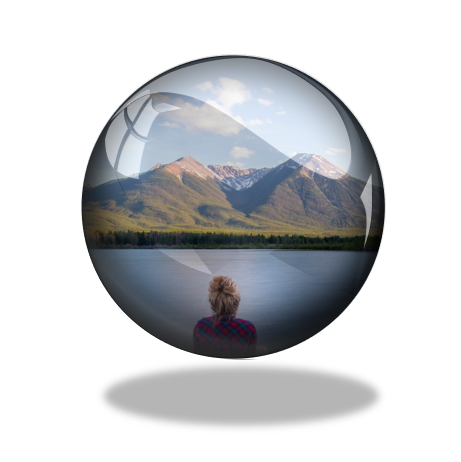
Picture of gazing at a mountain as a metaphor for acceptance

#011 – It is what it is

Recognise and appreciate what you can and cannot change – Conserve your emotional and spiritual energy for the things that you can do something about

Please help us to get the word out in just two clicks – click here – then click the like button

Girl sat on jetty gazing at mountain as a metaphor for acceptance

Why take this challenge?

To focus your energy and emotion on things you can (and will) do something about

To limit the mental wastage caused by fretting over things you cannot do anything about


Graphic image reflecting different pathways to take the adventure

Last month, Adventure #008 helped us to practice gratitude. To stop, appreciate, and be blessed by all that is good in our lives. This week our Adventure is to the other side of the coin – acceptance of the bad things.

There is sadly a lot of that going around at the moment, and as we move past the supportive frameworks currently in place, we will realise the true implications of the pandemic. We will discover that much has changed further than we realised, and a lot of that is going to be unpleasant.  Sorry.

But until we take the journey to accept things as they really are, we cannot see them clearly. We colour them through lenses of yearning and despair. And that lack of clarity means that our approaches to dealing with them are fundamentally flawed, or non-existent.

Len Pendle* says he always tried to coach in people one key phrase: “It is what it is!”

That might seem obvious. And yet most of the damage we do to ourselves arises from failing to accept that simple fact. Until we can step into accepting what it is, we are powerless to make it anything different. And we are ineffective in readying ourselves for its impact.


Graphic image reflecting the idea of a Pack of resources to support the adventurer in the challenge

You may find the following resources helpful in tackling your challenge or in gaining further benefits from the skills and insights you develop

To catch up on past adventures you may have missed, feel free to browse our Adventures Library


Graphic image suggesting the idea of posting a record of the adventurer's journey

Let us know how you get on.
Share your experience, your insights and your observation using the comments section at the bottom of the Linkedin post.

Please help us to extend and develop our community by sharing what you are doing. Click on the links below where you are most active, and then like or share the article to your network. Thank you for helping.

And share your progress and insights with the Twitter LbA community using #leadingbyadventure

Useful links:


About Culturistics: Empowering full strategy engagement through: adventurous visions; deployment frameworks; culture management; facilitative leadership; inspirational meetings; insight landscaping; & powerful partnerships
Tactile puzzles represented by a matchbox

#010 – Now for something completely different …

Tactile physical puzzles can provide helpful respite from Zoom fatigue. Give yourself a short break from the screen – try something manualTactile puzzles can provide a welcome distraction

Please help us to get the word out in just two clicks – click here – then click the like button

Benefits of a Tactile puzzle

Why take this challenge?

Give yourself a screen break

Trying out different modes of relaxation and renewal


Graphic image reflecting different pathways to take the adventure

During my research to pull these adventures together, a number of people emphasised the use of small physical challenges to get away from the screen. Things like learning to juggle and mechanical puzzles take the brain somewhere totally different and, for some, that can be amazingly helpful.

So this weeks adventure is to see whether you may be one of those people.

If you have a puzzle at home to use, then try that (as long as it is not screen based). If not, then I have populated the tracks with simple ideas you might use with common objects.


Graphic image reflecting the idea of a Pack of resources to support the adventurer in the challenge

You may find the following resources helpful in tackling your challenge or in gaining further benefits from the skills and insights you develop

To catch up on past adventures you may have missed, feel free to browse our Adventures Library


Graphic image suggesting the idea of posting a record of the adventurer's journey

Let us know how you get on.
Share your experience, your insights and your observation using the comments section at the bottom of the Linkedin post.

Please help us to extend and develop our community by sharing what you are doing. Click on the links below where you are most active, and then like or share the article to your network. Thank you for helping.

And share your progress and insights with the Twitter LbA community using #leadingbyadventure

Useful links:


Picture of woman practicing gratitude in a field of yellow flowers

#008 – Practicing Gratitude

Adopt a happier perspective on your life through intentional appreciation of it; Build attitudes that bless those around you and adds a sense of joy and delight.Banner heading for Practicing Gratitude

Graphic image saying Power-Up and reflecting the intended advantage to be gained through the adventure

Why take this challenge?

Gradually increase our enjoyment and appreciation of the things we have.

Make it easier for us to form good relationships and the basis of more fulfilling friendships

Provide a platform for increasing our general happiness and contentment

Build more harmony


Graphic image reflecting different pathways to take the adventure

One of my favourite things is a Lindor Ball – a small sphere of melt in the mouth chocolate. They have a great advertising strapline: “You provide the moment, we’ll provide the bliss.” – and they do. But ONLY if I provide the moment.

To my shame, if I am distracted, I can find that I have gotten through more than are good for me, and struggle to really remember enjoying even one of them. But if I pause to focus on the moment, then just one ball is absolutely fabulous. But above all else, it makes me really appreciate how lucky I am.

It starts with chocolate, but it ends up as an overwhelming sense of gratitude for so, so much. So this week’s adventure is to replicate this for yourselves.


Graphic image reflecting the idea of a Pack of resources to support the adventurer in the challenge

You may find the following resources helpful in tackling your challenge or in gaining further benefits from the skills and insights you develop

To catch up on past adventures you may have missed, feel free to browse our Adventures Library


Graphic image suggesting the idea of posting a record of the adventurer's journey

Let us know how you get on.
Share your experience, your insights and your observation using the comments section at the bottom of the Linkedin post.

Please help us to extend and develop our community by sharing what you are doing. Click on the links below where you are most active, and then like or share the article to your network. Thank you for helping.

And share your progress and insights with the Twitter LbA community using #leadingbyadventure

Useful links:


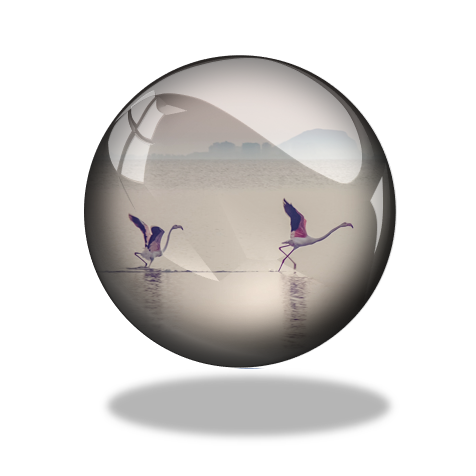
Flamingos taking off - metaphor for the space between one situation and the next

#007 – Using the Third Space

Use small pauses between things to best ready yourself for each challenge and opportunity. Divest yourself of the debris of what’s past and put on your best for what’s to come.

Graphic image saying Power-Up and reflecting the intended advantage to be gained through the adventure

Why take this challenge?

Be at your best for each challenge and situation throughout your day.

Better work-life balance through intentional transitions between the ideal work you, and the ideal home you.

Improved mental health for you and those around you


Graphic image reflecting different pathways to take the adventure

In our second adventure – Fixing ‘ … that’s not me’ – we explored how ‘who you are’ is something you can choose. You can put on the ‘you’ you want. You can choose the ‘you’ that will be best for each situation. Even each moment.

Out of his research into top performing athletes, Adam Fraser has discovered that in many cases our success is determined by something most people take for granted – the transition between one thing and the next. Too often we bring who we were in the last battle into the beginning of the next one. And the fact is, that may not be the best option for us.

Around this idea, Adam has prepared some excellent (brief) resources that I heartily recommend you take a look at. This week’s adventure is about better understanding what happens to YOU in those transitions, and then trying out his simple three step approach.
 

Graphic image reflecting the idea of a Pack of resources to support the adventurer in the challenge

You may find the following resources helpful in tackling your challenge or in gaining further benefits from the skills and insights you develop

Other resources to help you create healthier environments

To catch up on past adventures you may have missed, feel free to browse our Adventures Library


Graphic image suggesting the idea of posting a record of the adventurer's journey

Let us know how you get on.

Share your experience, your insights and your observation using the comments section at the bottom of the Linkedin post.

Please help us to extend and develop our community by sharing what you are doing. Click on the links below where you are most active, and then like or share the article to your network. Thank you for helping.

And share your progress and insights with the Twitter LbA community using #leadingbyadventure

Useful links:


Empathy for a person sitting in an unusual situation on a rock in the middle of water

#009 – Not Your Usual Seat – Building Empathy

Develop insights that will help you to improve the relationships around you – help others to move past their points of ‘stuckness’ simply by asking questions

Please help us to get the word out in just two clicks – click here – then click the like button

Graphic image saying Power-Up and reflecting the intended advantage to be gained through the adventure

Why take this challenge?

Develop insights that will help you to improve the relationships around you

Help others to move past their points of ‘stuckness’ simply by asking questions

Form relationships that stretch you and better develop you for #futurework


Graphic image reflecting different pathways to take the adventure

The future of work is increasing rates of automation, change, complexity, uncertainty …

And OPPORTUNITY!!!

But to engage with that opportunity, we need to be able to cope with all of the rest. As AI and automation take over the routine in our roles, we will increasingly be left with the things that are not routine – basically our roles will revolve around change. Change in our circumstances, our tools, our roles. And change in our own expectations and those of others.

Key to coping with this will be learning and relationships. To be good at this stuff, we need to spend more time with people and ideas.

But unfortunately, busy-ness, uncertainty and complexity are driving us the other way. It is becoming harder to simply take time out for a chat, or to explore a new concept. But unless we do, we will fall behind, the busy-ness will increase, and we will fail to compete and fall into a spiral of decline.

So our adventure for this week is about taking a different perspective on reaching out to new people and new ideas. Seeing what things look like from the other side, and building our abilities (and hopefully our joy) in looking at things through someone else’s eyes.


Graphic image reflecting the idea of a Pack of resources to support the adventurer in the challenge

You may find the following resources helpful in tackling your challenge or in gaining further benefits from the skills and insights you develop

To catch up on past adventures you may have missed, feel free to browse our Adventures Library


Graphic image suggesting the idea of posting a record of the adventurer's journey

Let us know how you get on.
Share your experience, your insights and your observation using the comments section at the bottom of the Linkedin post.

Please help us to extend and develop our community by sharing what you are doing. Click on the links below where you are most active, and then like or share the article to your network. Thank you for helping.

And share your progress and insights with the Twitter LbA community using #leadingbyadventure

Useful links:


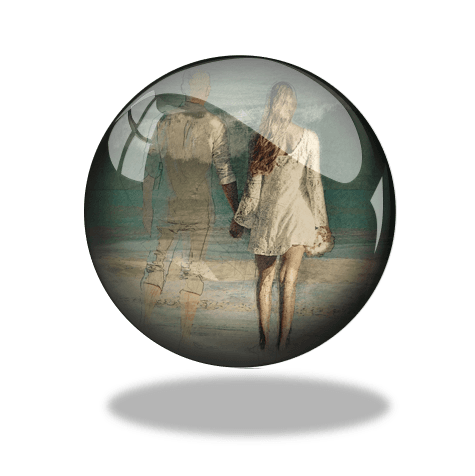
Glass orb - people on beach - getting to know someone better through their story and through walking and listening

#006 – Walk and Listen

Walk and Listen . Get to know someone better through their own story in their own words. Don’t let Covid constrain our working practice more than it has.

Why take this challenge?

Build better, closer understanding with the people ‘around’ you.

Recognise people in their own story and enjoy the privilege of sharing in that story.

Break out of the working patterns that Lockdown has imposed upon us.


Back when working life was more ‘normal’, I used to organise ‘Walk and Talk‘ activities for mixed groups of different clients in the Derbyshire Peaks.

They were always a huge success. There is something about the rhythm of walking that makes silence okay, and keeps the brain moving.

Recently, Dietmar Harteveld suggested a walk and talk to me – him walking in Yorkshire, and me in Essex, connected by our mobiles, and I have to say it worked great. It felt so good to be out of the house. And it felt like he was there keeping pace beside me.

And it prompted me to think of an Adventure that Miles Protter proposed to me at the start of all this, and the realisation that now, in the heart of the restrictions, will be perfect for it.

So this week’s adventure is about two things, both of which thumbs our nose at Covid: walking virtually with someone; and making a real human connection through listening to their story.


You may find the following resources helpful in tackling your challenge or in gaining further benefits from the skills and insights you develop

To catch up on past adventures you may have missed, feel free to browse our Adventures Library


Let us know how you get on.
Share your experience, your insights and your observation using the comments section at the bottom of the Linkedin post.

Please help us to extend and develop our community by sharing what you are doing. Click on the links below where you are most active, and then like or share the article to your network. Thank you for helping.

And share your progress and insights with the Twitter LbA community using #leadingbyadventure

Useful links:


Acknowledgements:

Inspired by Miles Protter, Steve Quinn, Dietmar Harteveld, and Jeremy Clare, and all of those who have helped me shape and trial Walk and Talk over the years:  Andrew Taylor, Andy Withers, Bev Shepherd, Bill Pigg, Bob Judd, Brian Holliday, Bryan Sargeant, Chandra Lodhia, Clare Holden, Dario Buccheri, Derek Silcock, Dilip Popat, Ian Winter, Jennifer Atkinson, Jeremy Clare, Jonathan Chappel, Juergen Maier, Malcolm Denham, Mark Holden, Mark Preston, Mark Richardson, Mark Savage, Martin Panak, Martin Stow, Mike Brown, Mike Clargo, Peter Desmond, Phil Ranson, Richard Warren, Robin Phillips, Russ Spargo, Sarah Amies, Simon Ormston, Steve Blakeman, Steve Watters, Wayne Tantrum, Wendy O’Sullivan, Zoe Keens
Picture of painted face - metaphor for making more memorable meetings

#005 – Disrupting the Camouflage

Disrupting the Camouflage; Better Embrace Diversity in your Meetings; Make your virtual meetings a visual feast

Why take this challenge?

To redress the effect that web conferencing (Zoom, Teams, etc.) is having on our ability to remember meeting content.

To make discussion within meetings more memorable, and thereby easier to apply and recall in practice.

To increase creativity and diversity in virtual meetings.


Virtual meetings have enabled so much to take place through the Covid pandemic that otherwise would not have been possible.

But there are problems, and one of these is that people are finding it more difficult to remember them. The visual similarity between one meeting and the next (same interface, same room) is limiting the cues our mind uses to connect pieces of information together, and this means we are getting more forgetful.

So this weeks adventure is all about creating new perspectives in your meetings to aid people’s ability to ‘connect the dots’ in their own memories.


You may find the following resources helpful in tackling your challenge or in gaining further benefits from the skills and insights you develop


Let us know how you get on.
Share your experience, your insights and your observation using the comments section at the bottom of the Linkedin post.

Please help us to extend and develop our community by sharing what you are doing. Click on the links below where you are most active, and then like or share the article to your network. Thank you for helping.

Useful links: